
Aspirin & the gut
In plain language
Aspirin is regarded as familiar and safe — millions of people take it for pain or to protect the heart and blood vessels. Yet “safe for everyone” is not quite accurate. In one person aspirin demonstrably protects, while in another it actually causes stomach or gut complaints. The reason is that your body processes aspirin in a personal way. Small differences in your genes determine how quickly you break it down; your gut bacteria help to shape how it works; and aspirin can weaken the gut barrier, especially in those who are sensitive to it. That is why the useful question is not “is aspirin good or bad”, but “for whom does it work, and for whom might it be harmful?”. This makes it understandable why the same little tablet is a protection for one person and a risk for another — and why personal insight makes the difference here.
The science behind
Aspirin belongs to the NSAIDs and causes numerous hospital admissions worldwide through stomach and gut bleeding. Even low doses can weaken the gut barrier in sensitive people, resulting in dysbiosis and microbial translocation. How someone responds depends partly on genetic differences: variants in genes such as CYP2C9 and UGT1A6 influence the breakdown of aspirin and thereby the risk of side effects. Those genes, however, remain backstage — they color the sensitivity, but do not determine the picture on their own.
A second layer is the microbiome. Gut bacteria can help to metabolize aspirin, which shifts both its effectiveness and its possible toxicity. In this way the action of the medicine becomes interwoven with the dialogue between host and microbiome. The clinical balance is correspondingly personal: in people with a hereditary predisposition to bowel cancer, long-term aspirin use showed a clear protective effect, whereas in the over-70s a comparable benefit failed to appear and the bleeding risk rose above all with the dose. Additional factors — age, comorbidity, a Helicobacter infection or the simultaneous use of other anti-inflammatories or anticoagulants — raise the risk further. Aspirin is therefore not “one size fits all”: context and profile help to determine whether it protects or harms.
The common thread is co-metabolism: whether aspirin brings benefit or complication arises from the interplay of DNA, the microbiome, the gut barrier, metabolites and lifestyle together. Multi-omics can look at those layers together and reveal subtle damage to the gut barrier early, so that dosage and timing can be better tailored to the individual in consultation with the doctor — not a general prescription, but a personal weighing-up. This reading is supportive and observational — not a medical diagnosis.
Illustration & CosmoTalks
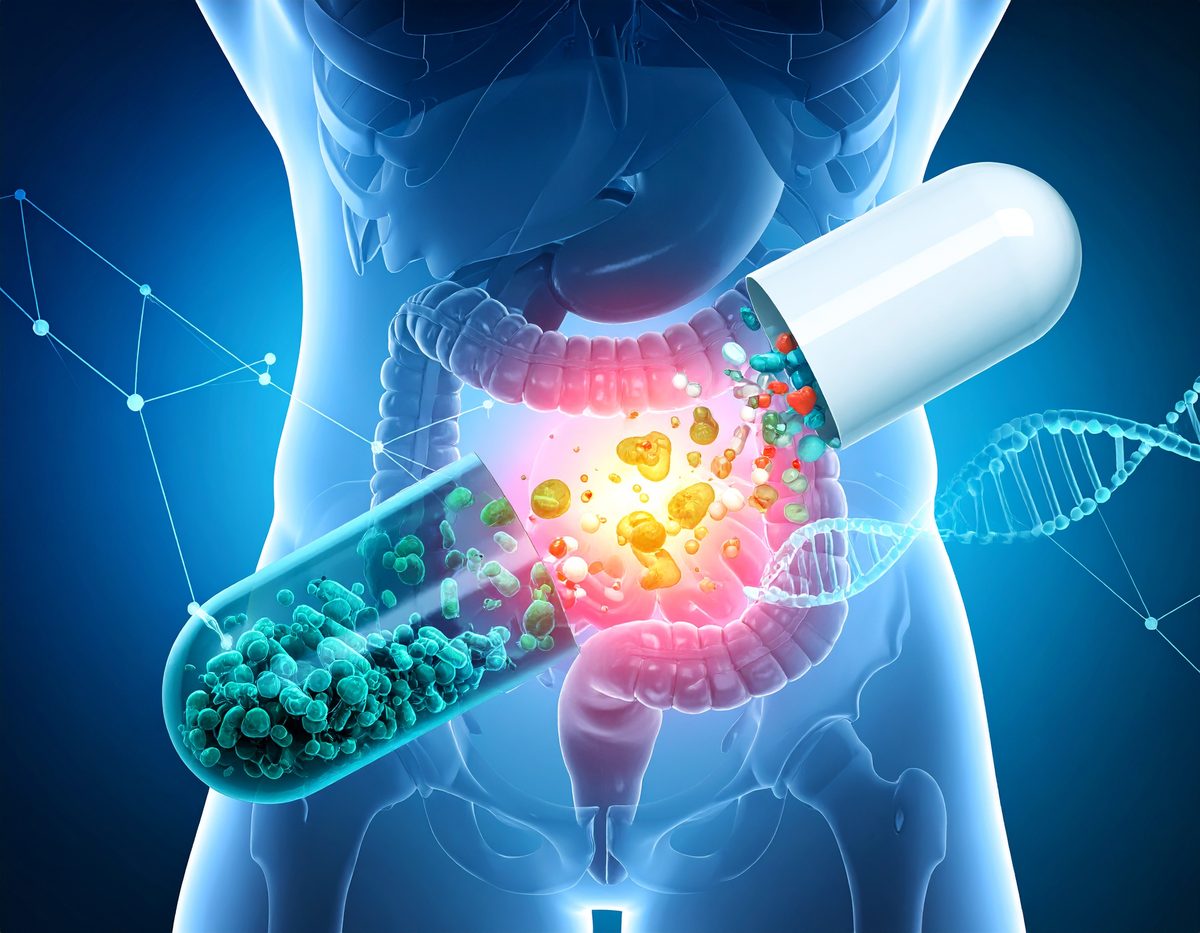
From insight to everyday practice — five episodes about measuring, understanding and acting.
- S12·E1 — From a single test to the whole story
- S12·E2 — Multi-omics: the film instead of the photo
- S12·E3 — Why the same advice doesn't work for everyone
- S12·E4 — Measure, understand, adjust
- S12·E5 — Prevention as a lifestyle
Related concepts
Explore further in the Cosmogroup ecosystem
From knowledge to application — choose your next step.
My InnerSelfie
Map your personal aspirin balance: DNA, microbiome and gut barrier together, translated into readable signals to support your doctor.
Discover My InnerSelfie →My Key Nutrients
Support a resilient gut barrier from within, with nutrition and formulas tailored to your co-metabolism.
See the range →CosmoPulse
For performance environments: readiness, adaptation and recovery bundled into a single readable decision signal.
Discover CosmoPulse →The books · HOST · FORMULA · EDGE
The common thread of this science, from insight to everyday application, by Petra Van Gucht.
See the books →Scientific references
• Bakshi A., et al. (2022) — Aspirin and colorectal cancer risk in older adults (ASPREE).
• Caruso R., Lo BC., Núñez G. (2020) — Host–microbiota interactions in inflammation. Nat Rev Immunol.
• Van Gucht P. — EDGE (COSMO trilogy): why the same medicine does not do the same thing in everyone.
Frequently asked questions
- Is aspirin safe for everyone?
- Not without qualification. Where one person gains a clear benefit, another is at risk of stomach and gut damage. DNA, microbiome, age and context all help to determine the balance.
- Why does my body respond differently to aspirin?
- Gene variants (such as CYP2C9 and UGT1A6) influence its breakdown, and your gut bacteria help to metabolize aspirin. Together they determine effectiveness and risk.
- Can low-dose aspirin still cause damage?
- Yes, even low doses can weaken the gut barrier in sensitive people. The risk rises with the dose and with factors such as age and the simultaneous use of other medicines.
- May I adjust my medication based on this?
- No. Decisions about aspirin remain with your doctor. A multi-omics reading is supportive and observational, not a diagnosis or dosing advice.
Hooked on co-metabolism?
You have just read one piece of the puzzle. There is a path for the curious who want to understand themselves better — and a deeper library for the professional who works with it.
Discover your own story
Curious what co-metabolism means for yóu? Discover what your own body tries to tell you every day — and stay up to date with new insights.
Discover your analysis →Join us and gain access
Become an affiliated healthcare professional and unlock the depth we reserve for our partners: the books to read online, the Well@Work and Sport experiences, the protocols and a network of like-minded peers.
Join us →