
The gut–heart axis
In plain language
Cardiovascular disease remains the number one cause of death worldwide, and yet the classic risk factors — cholesterol, blood pressure, smoking — do not explain everything. Why do some people retain a low-grade inflammation and fatigue, even when their medication is perfectly adjusted? Increasingly, the answer points to an unexpected organ: the gut. Your gut flora produces substances that pass directly into your bloodstream, where they influence the wall of your blood vessels, your blood pressure and even the electrical impulses of your heart rhythm. The heart is therefore not an isolated pump, but a listener in a larger conversation. That explains why cardiac resilience is so personal: it hinges not on a single factor, but on the interplay between your genes, your microbiome and your lifestyle.
The science behind
A central player in the gut–heart axis is TMAO (trimethylamine-N-oxide). Certain gut bacteria convert nutrients into a precursor that the liver processes into TMAO; raised TMAO levels go hand in hand with damage to the vessel wall and an increased risk of thrombosis. At the same time, short-chain fatty acids (SCFAs) — which form when gut bacteria ferment fiber — are protective: they dampen low-grade inflammation and help regulate blood pressure. The balance between these two families of metabolites helps color cardiovascular risk.
The gut barrier matters too. When the gut wall becomes more porous, bacterial fragments leak into the bloodstream and drive systemic inflammation that can worsen heart failure — including the type with preserved pump function (HFpEF), where inter-organ communication between gut, heart and metabolism is central. Some bacterial metabolites also act on the ion channels of heart cells, raising the likelihood of rhythm disturbances such as atrial fibrillation.
The through-line is co-metabolism: blood pressure, rhythm and resilience arise from the interplay of DNA, microbiome, metabolites and lifestyle together — not from one gene or one bacterium. Gene variants play a part in the background, but it is the whole that determines how your heart behaves under pressure. This reading is supportive and observational — not a medical diagnosis.
Illustration & CosmoTalks
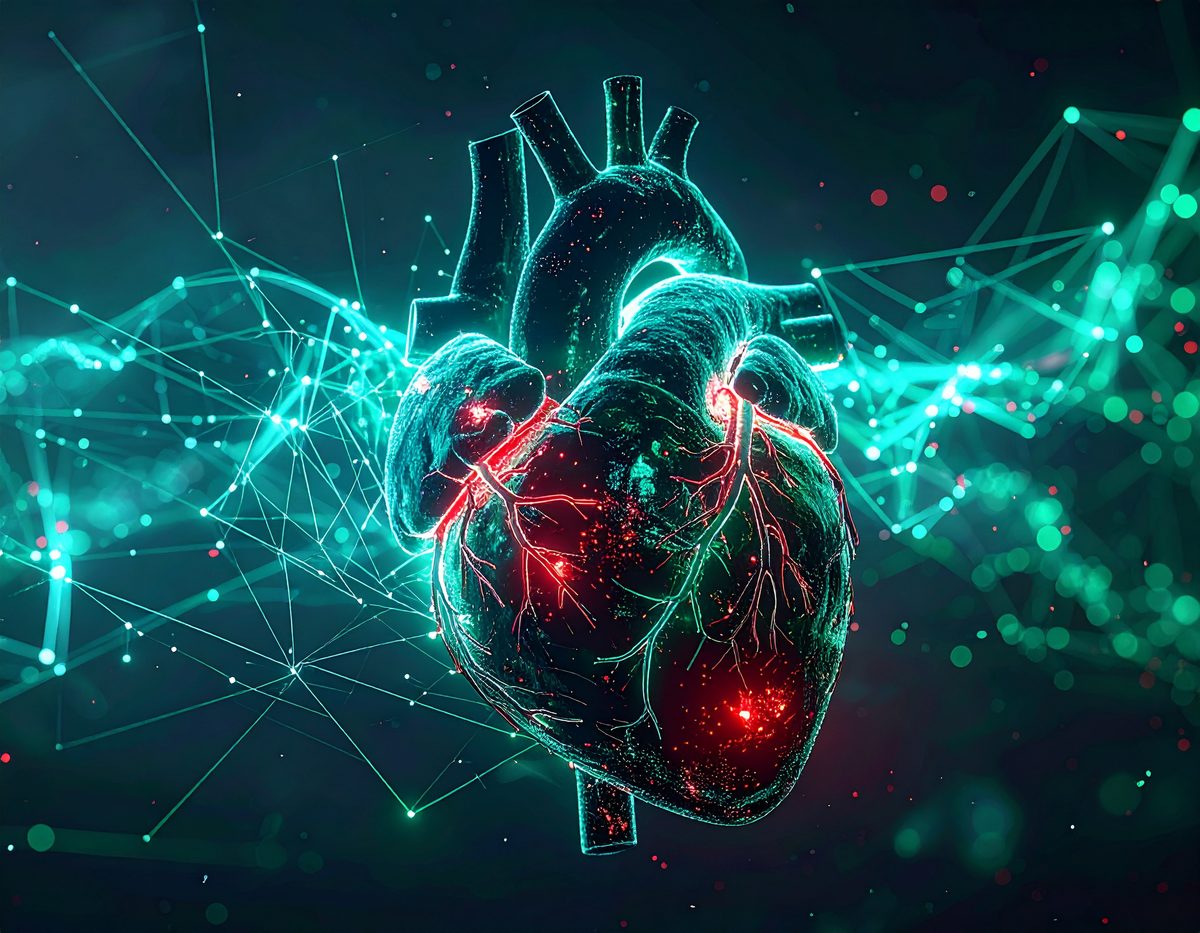
Your body is not a collection of separate organs, but one cooperating whole — human and microbes.
- S1·E1 — Why you’re never alone: the human as an ecosystem
- S1·E2 — How your gut talks to your heart, liver and kidneys
- S1·E3 — Metabolites: the language between your organs
- S1·E4 — When the dialogue falters: dysbiosis and inflammation
- S1·E5 — Understanding one whole instead of separate complaints
Related concepts
Explore further in the Cosmogroup ecosystem
From knowledge to application — choose your next step.
My InnerSelfie
Map the gut–heart axis: DNA, microbiome and metabolites (such as TMAO and SCFAs) together, translated into readable signals.
Discover My InnerSelfie →My Key Nutrients
Support your vascular health: fiber-rich, SCFA-friendly nutrition and targeted formulas tailored to your co-metabolism.
See the range →CosmoPulse
For performance settings: readiness, adaptation and recovery bundled into one readable decision signal.
Discover CosmoPulse →The books · HOST · FORMULA · EDGE
The through-line of this science, from insight to everyday application, by Petra Van Gucht.
See the books →Scientific references
• Schiattarella GG., et al. (2025) — Inter-organ crosstalk in heart failure with preserved ejection fraction. Circ Res.
• Cheraghi M., et al. (2025) — Microbial metabolites and cardiac arrhythmogenesis. Pathol Res Pract.
• Van Gucht P. — HOST (COSMO trilogy): the body as one cooperating whole.
Frequently asked questions
- What is the gut–heart axis?
- The continuous dialogue between your gut microbiome and your cardiovascular system. Microbial metabolites help shape blood pressure, heart rhythm and cardiac resilience.
- What is TMAO and why does it matter?
- TMAO is a metabolite formed from a precursor produced by gut bacteria. Raised levels are linked to blood-vessel wall damage and a greater risk of thrombosis.
- Can my microbiome influence my blood pressure?
- Yes — short-chain fatty acids from fiber fermentation help dampen inflammation and regulate blood pressure, while dysbiosis can push in the opposite direction.
- Is this a replacement for cardiology care?
- No. Decisions always remain with your doctor. A multi-omics reading is supportive and observational, not a diagnosis.
Hooked on co-metabolism?
You’ve just read one piece of the puzzle. There’s a path for the curious who want to understand themselves better — and a deeper library for the professional who works with it.
Discover your own story
Curious what co-metabolism means for you? Discover what your own body tries to tell you every day — and stay up to date with new insights.
Discover your analysis →Join us and get access
Become an affiliated healthcare professional and unlock the depth we reserve for our partners: the books to read online, the Well@Work and Sport experiences, the protocols and a network of like-minded peers.
Join us →