
The gut–liver axis
In plain language
The liver is regarded as the detox organ par excellence, but it never works alone: it is in constant conversation with the gut. That matters, because liver values can stay normal for years while inflammation and scarring (fibrosis) quietly increase. Fatty liver — affecting up to a quarter of people worldwide — often runs its course silently. Conventional tests such as an ultrasound or a blood draw give only part of the picture: they do not see the immune activation and the microbiome status. That is exactly where the gut–liver axis comes in. The bile acids your liver produces steer your gut flora, and conversely gut metabolites steer your liver. Those who understand this dialogue often see risks earlier — before the liver values go off track.
The science behind
Bile acids form the core of the gut–liver axis. They are made by the liver, transformed by gut bacteria and, via receptors such as FXR and TGR5, feed back on inflammation, metabolism and bile flow. When the microbial composition shifts, the bile acid profile changes — and with it the inflammatory tone of the liver. In this way gut–liver crosstalk becomes interwoven with cholestasis and autoimmune processes.
A second axis is oxidative stress. Dysbiosis can disrupt the protective Nrf2 pathway and at the same time activate the inflammatory NF-κB pathway, which amplifies oxidative damage and fibrosis in fatty liver (MASLD). Bacteria also communicate via extracellular vesicles — small sacs that can switch on inflammatory pathways in the liver. Even epigenetic modifications in liver tissue turn out to be linked to a distinct microbial signature, which helps steer the progression of MASLD.
Why liver recovery is so personal is co-metabolic: it depends on the interplay between genes, microbiome, bile acids, metabolites and lifestyle — including exercise, which can improve liver function via gut–liver mitochondrial crosstalk. No single factor determines the picture on its own. This reading is supportive and observational — not a medical diagnosis.
Illustration & CosmoTalks
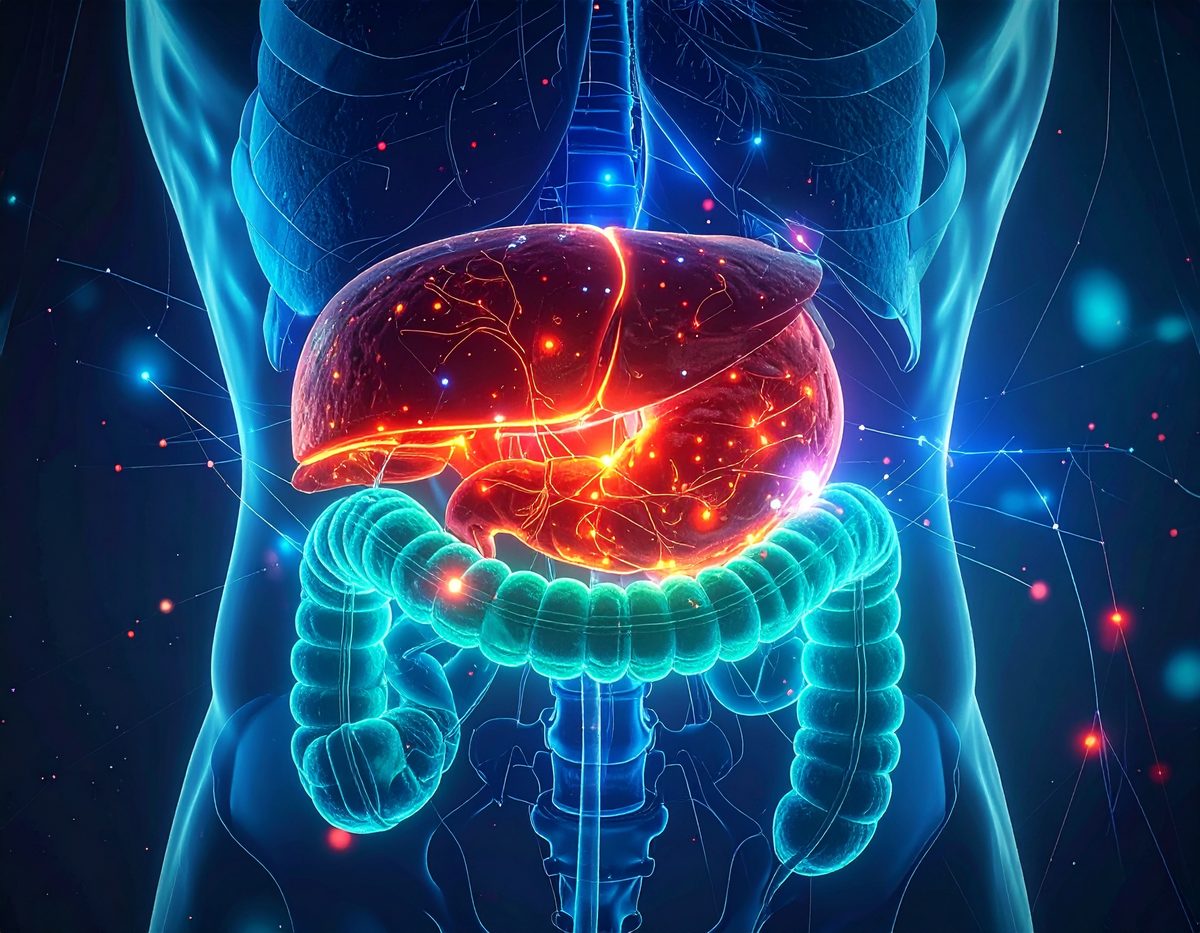
Your body is not a collection of separate organs, but one cooperating whole — human and microbes.
- S1·E1 — Why you’re never alone: the human as an ecosystem
- S1·E2 — How your gut talks to your heart, liver and kidneys
- S1·E3 — Metabolites: the language between your organs
- S1·E4 — When the dialogue falters: dysbiosis and inflammation
- S1·E5 — Understanding one whole instead of separate complaints
Related concepts
Explore further in the Cosmogroup ecosystem
From knowledge to application — choose your next step.
My InnerSelfie
Make the gut–liver dialogue visible: DNA, microbiome and metabolites (such as bile acids and SCFAs) together, translated into readable signals.
Discover My InnerSelfie →My Key Nutrients
Support your liver from within: fiber-rich, antioxidant-rich nutrition and targeted formulas tailored to your co-metabolism.
See the range →CosmoPulse
For performance settings: readiness, adaptation and recovery bundled into one readable decision signal.
Discover CosmoPulse →The books · HOST · FORMULA · EDGE
The through-line of this science, from insight to everyday application, by Petra Van Gucht.
See the books →Scientific references
• Yan H., et al. (2025) — Bile acids, FXR/TGR5 signaling and gut–liver immunoregulation. Front Immunol.
• Pirola CJ., et al. (2024) — Hepatic microbial signature and epigenetic modifications in MASLD. Lancet.
• Van Gucht P. — FORMULA (COSMO trilogy): early signals before the values go off track.
Frequently asked questions
- What is the gut–liver axis?
- The close, two-way dialogue between your gut and your liver via bile acids, microbial metabolites and oxidative stress. It helps determine liver inflammation and fibrosis.
- Why are my liver values normal when something is still going on?
- Liver values can stay normal for a long time while inflammation and fibrosis quietly increase. Microbiome and metabolite signals can make this visible earlier.
- What do bile acids do in this story?
- Bile acids connect liver and gut: the liver makes them, gut bacteria transform them, and via FXR/TGR5 they feed back on inflammation and metabolism.
- Can lifestyle influence the gut–liver axis?
- Yes — nutrition and exercise act on liver function via this axis. What suits you best differs from person to person. This is supportive, not a diagnosis.
Hooked on co-metabolism?
You’ve just read one piece of the puzzle. There’s a path for the curious who want to understand themselves better — and a deeper library for the professional who works with it.
Discover your own story
Curious what co-metabolism means for you? Discover what your own body tries to tell you every day — and stay up to date with new insights.
Discover your analysis →Join us and get access
Become an affiliated healthcare professional and unlock the depth we reserve for our partners: the books to read online, the Well@Work and Sport experiences, the protocols and a network of like-minded peers.
Join us →