
Gut–brain axis
In plain language
Do you know that feeling of brain fog? As if there is cotton wool in your head, your concentration drops away and your energy sinks. Many people look for the cause in lack of sleep or stress, but a surprising part of the answer lies lower down: in your gut. Your belly and your brain are in conversation with each other all day long — not as a metaphor, but for real, along nerves, hormones and immune signals. That is why the gut is sometimes called the “second brain”: around 90% of your serotonin is produced there. When that conversation runs smoothly, you feel clear and resilient. When it becomes strained — through nutrition that does not suit you, an impoverished microbiome or persistent stress — you notice it in your focus, your mood and your energy. Brain fog thus stops being a mystery and becomes a signal you can understand and adjust.
The science behind
The gut–brain axis works along several mutually reinforcing channels. The vagus nerve forms a direct motorway between the belly and the brain and carries signals in both directions. In addition, gut bacteria influence the production of neurotransmitters such as serotonin and dopamine, and when they digest fiber they produce short-chain fatty acids (SCFAs such as butyrate) that temper inflammatory processes and supply brain cells with fuel. This is the heart of co-metabolism: human and microbiome carry out metabolic steps together that neither could perform alone.
That is precisely where the explanation lies for why the same advice works for one person and not for another. Whether a meal brings calm or unrest depends on the interplay between your DNA, your microbiome, your metabolites and your lifestyle — not on one gene or one bacterium in isolation. Low-grade inflammation and a dysregulated stress response (via cortisol and the permeability of the gut wall) are linked in the literature to low mood and brain fog. Timing also plays a part: your microbiome follows a day–night rhythm, and clustering meals within a fixed time window can better synchronize the axis.
The gut–brain lens therefore does not read those signals in isolation, but as one co-metabolic whole. My InnerSelfie maps DNA, microbiome and metabolome together and translates that into readable signals about your cognitive clarity and mental resilience. This reading is supportive and observational — not a medical diagnosis.
Illustration & CosmoTalks
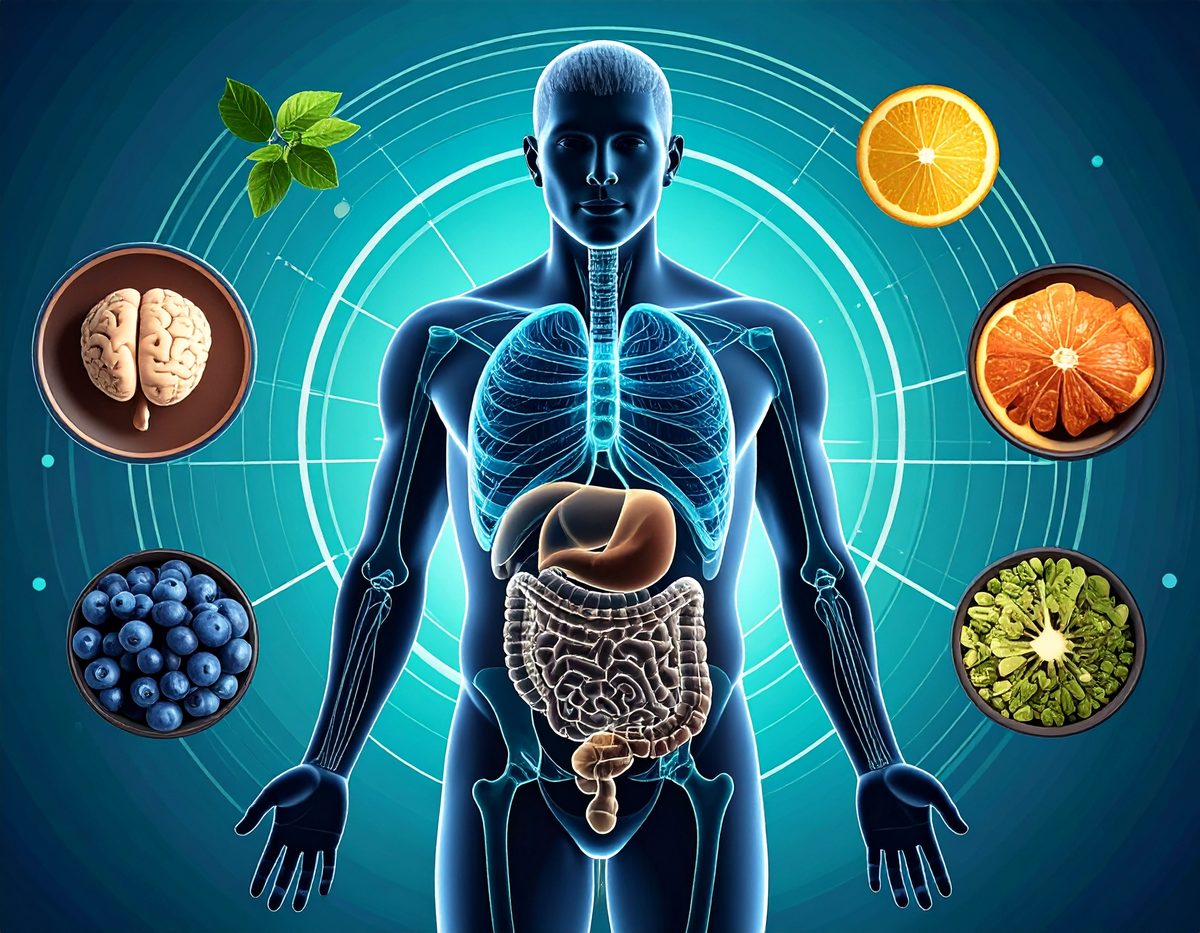
How your gut steers your mood and stress, in five short episodes.
- S3·E1 — Why mood is not only in your head
- S3·E2 — Your morning mood is not a character trait
- S3·E3 — Why stress hits your digestion first
- S3·E4 — Your microbiome has a day–night rhythm
- S3·E5 — Emotions are metabolic events
Related concepts
Explore further in the Cosmogroup ecosystem
From knowledge to application — choose your next step.
My InnerSelfie
Map your own gut–brain axis. One multi-omics analysis of DNA, microbiome and metabolome, translated into your cognitive clarity and resilience.
Discover My InnerSelfie →My Key Nutrients
Feed your gut–brain axis in a targeted way: polyphenols, a tryptophan rhythm and postbiotics (SCFAs) — also with sensitive fiber digestion.
View the range →CosmoPulse
For performance settings: readiness, brain–gut adaptation and recovery bundled into one readable decision signal for coaches and staff.
Discover CosmoPulse →The books · HOST · FORMULA · EDGE
The gut–brain axis as a common thread, from science to everyday application, by Petra Van Gucht.
See the books →Scientific references
• The Lancet Psychiatry (2021) — Inflammation, microbiome and mental health.
• Nature Metabolism (2021) — Polyphenols and microbiota-driven brain health.
• Frontiers in Neuroscience (2020) — Vagus nerve stimulation and cognitive function.
• Emily Leeming, Genius Gut.
Frequently asked questions
- What is the gut–brain axis in brief?
- The two-way connection between your gut and your brain, via nerve pathways (especially the vagus nerve), neurotransmitters and immune and metabolic signals. In this way gut and brain continuously influence each other.
- Does brain fog really come from the gut?
- Brain fog is often not a stand-alone problem but a signal of imbalance in the gut–brain axis: fewer short-chain fatty acids, low-grade inflammation or a dysregulated stress response can affect focus and energy.
- How does my microbiome influence my mood?
- Gut bacteria influence the production of neurotransmitters such as serotonin, make anti-inflammatory short-chain fatty acids and help regulate the cortisol balance — all factors that act on mood and focus.
- Does simply “eating more fiber” help against brain fog?
- Not always. With limited fiber digestion, more fiber may actually cause symptoms. What works differs from person to person, because the outcome depends on your microbiome, genes and lifestyle together.
- Can I have my gut–brain axis measured?
- My InnerSelfie maps DNA, microbiome and metabolites together and translates that co-metabolism into readable signals about cognitive clarity and mental resilience. This reading is supportive, not a medical diagnosis.
Hooked on co-metabolism?
You have just read one piece of the puzzle. There is a path for the curious who want to understand themselves better — and a deeper library for the professional who works with it.
Discover your own story
Curious what co-metabolism means for you? Discover what your own body is trying to tell you every day — and stay up to date with new insights.
Discover your analysis →Join us and gain access
Become an affiliated healthcare professional and unlock the depth we reserve for our partners: the books to read online, the Well@Work and Sport experiences, the protocols and a network of like-minded people.
Join us →