
The microbiome as detox partner
In plain language
Many people feel listless even though they sleep enough and eat reasonably healthily. An often underestimated factor is the body’s detox capacity. The liver gets all the attention for this, but the gut and its microbiome do at least as much: they help process and clear waste products, food residues and environmental toxins. When that collaboration runs smoothly, energy stays available for your day; when it falters, energy disappears into inflammation and recovery and you feel it as fatigue and loss of concentration. Detox is therefore not a cure or a gadget, but daily, biological teamwork between liver and gut. Those who understand where that teamwork runs stiff also see where energy can be gained — without complicated tricks, but through the right support of that system.
The science behind
Detox is a layered process in which gut and liver complement each other. A balanced microbiome supports liver enzymes and helps limit oxidative stress (Zhou et al., 2024). Bacteria produce metabolites — short-chain fatty acids, indoles and amino-acid breakdown products — that help determine whether the body clears substances efficiently or instead accumulates them. Those same metabolites therefore act as readable markers of how smoothly detoxification is running.
The environment weighs heavily. The exposome — the sum of stress, nutrition, environmental factors and medication residues — is in close interplay with the microbiome and energy metabolism (Merra et al., 2024; Bosch et al., PNAS, 2024). Classic check-ups only signal something once liver or kidney values are already out of balance; the microbial and metabolic signals often shift earlier. Gene variants in detox pathways (backstage factors such as the GST and CYP450 families) help determine how quickly someone processes certain substances, but are never separate from microbiome and lifestyle.
The connecting logic is again co-metabolism: detox capacity arises from the interplay of DNA, microbiome, metabolites and environment. Personalized interventions — targeted nutrition and biotics — can support that capacity and so free up energy (Abdulsalam et al., 2024). This reading is supportive and observational — not a medical diagnosis.
Illustration & CosmoTalks
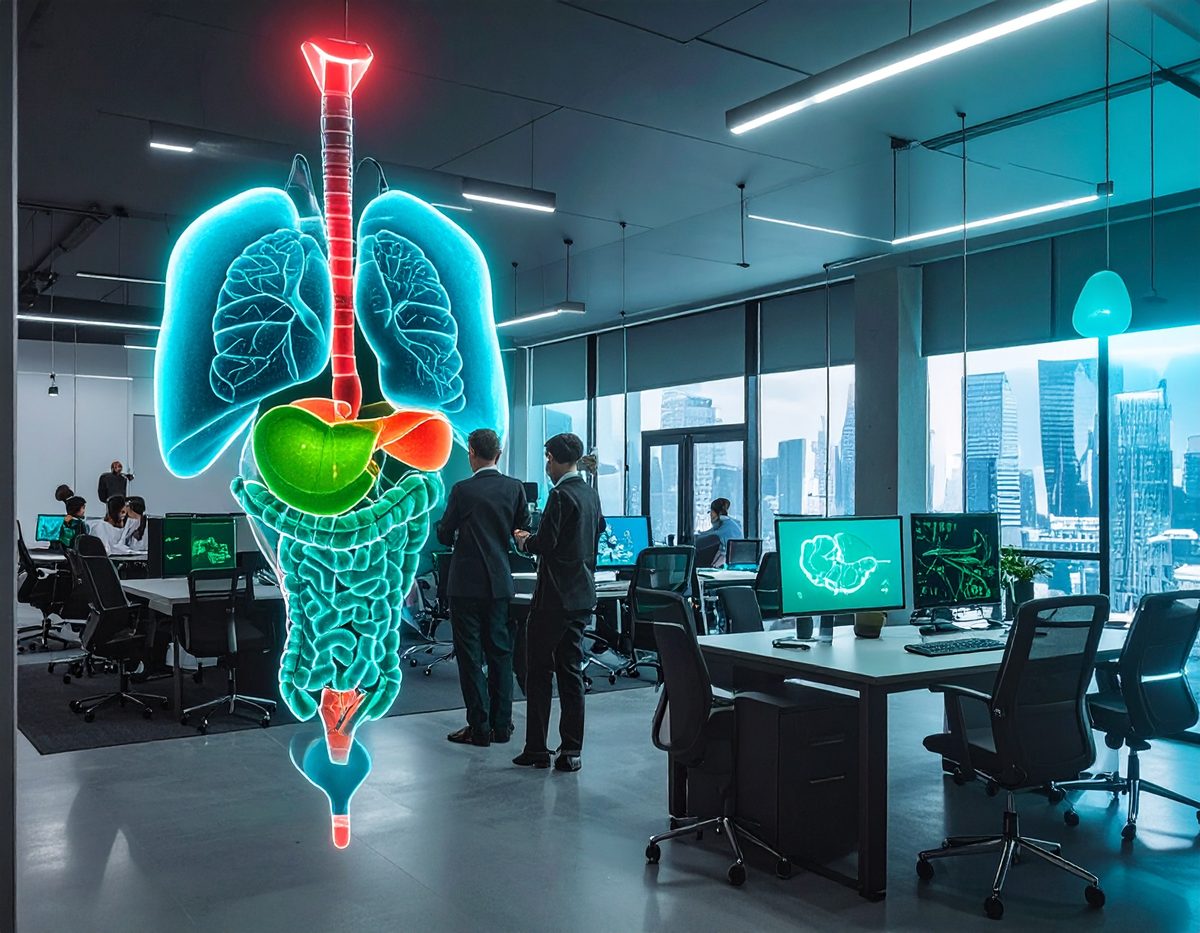
How your body clears out and repairs itself — five episodes on detox and regeneration.
- S8·E1 — Detox is teamwork: liver and gut
- S8·E2 — The microbiome as a detox partner
- S8·E3 — Where energy goes into recovery
- S8·E4 — The exposome: everything that acts on you
- S8·E5 — From clearing out to resilience
Related concepts
Explore further in the Cosmogroup ecosystem
From knowledge to application — choose your next step.
My InnerSelfie
Reveal how smoothly your body clears out: detox and energy signals from DNA, microbiome and metabolites.
Discover My InnerSelfie →My Key Nutrients
Support detoxification and recovery: fiber, polyphenols and biotics that feed the gut-liver collaboration.
See the range →CosmoPulse
For recovery and load capacity: where energy leaks away, made visible as a readable signal.
Discover CosmoPulse →The books · HOST · FORMULA · EDGE
The through-line of this science, from insight to everyday application, by Petra Van Gucht.
See the books →Scientific references
• Bosch et al. (2024) — Exposome–microbiome interactions and vitality. PNAS.
• Merra et al. (2024) — The exposome, microbiome and energy metabolism.
• Van Gucht P. — HOST (COSMO trilogy): the gut as a co-player in detoxification and energy.
Frequently asked questions
- Does only the liver carry out detoxification?
- No. The gut and its microbiome help process and clear toxins; liver and gut work as a team.
- Why do I feel listless when my blood values are normal?
- Energy can leak away into inflammation and recovery before classic values deviate. Microbial and metabolic signals often shift earlier.
- What is the exposome?
- The sum of all environmental factors that act on you — stress, nutrition, environment, medication residues — that help steer your microbiome and energy.
- Can I support my detox capacity?
- Often yes, via targeted nutrition and biotics. What suits you best differs from person to person, because it depends on your co-metabolism. This is supportive, not a diagnosis.
Hooked on co-metabolism?
You’ve just read one piece of the puzzle. There’s a path for the curious who want to understand themselves better — and a deeper library for the professional who works with it.
Discover your own story
Curious what co-metabolism means for you? Discover what your own body tries to tell you every day — and stay up to date with new insights.
Discover your analysis →Join us and get access
Become an affiliated healthcare professional and unlock the depth we reserve for our partners: the books to read online, the Well@Work and Sport experiences, the protocols and a network of like-minded peers.
Join us →