
Long COVID & mitochondrial exhaustion
In plain language
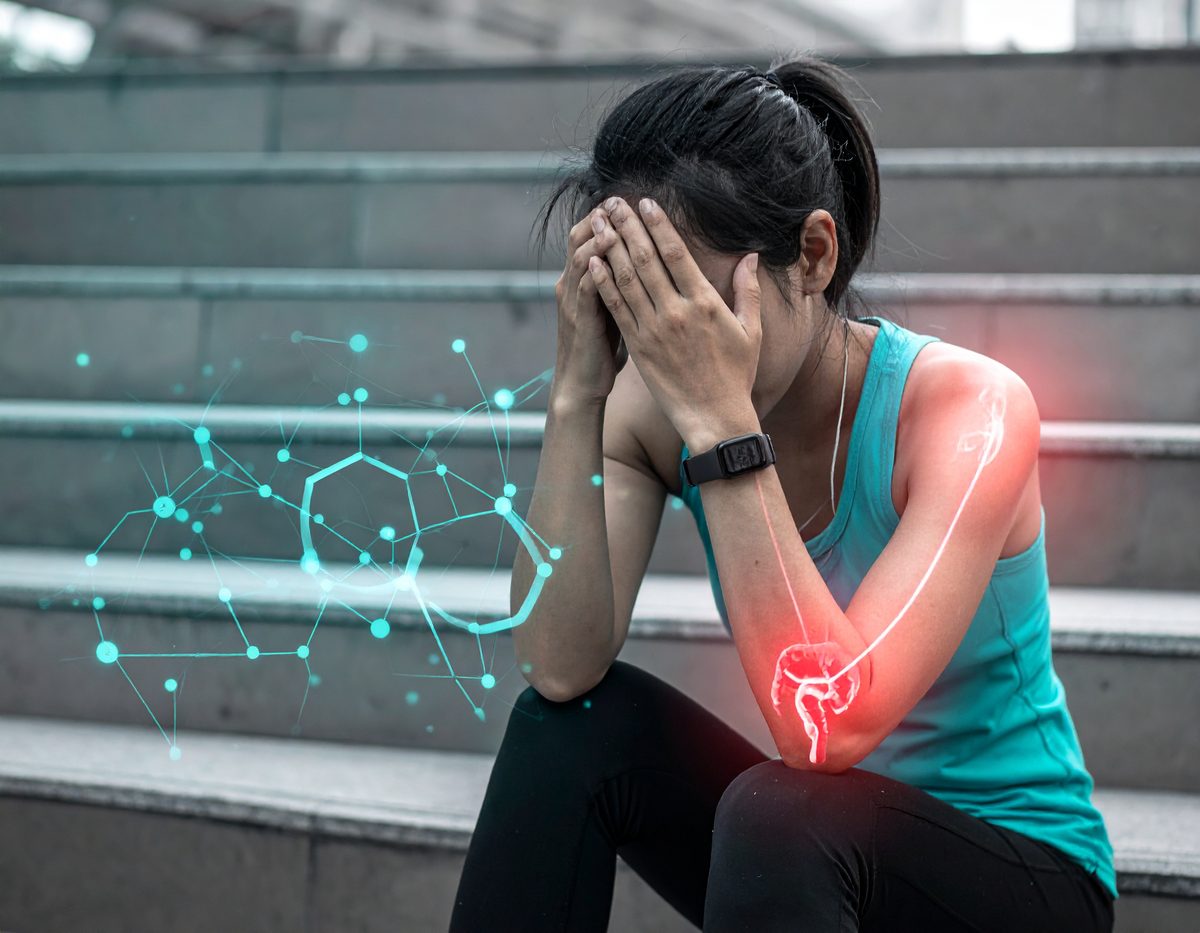
A sporty thirty-something develops extreme fatigue after a mild COVID infection: training sessions that used to come naturally now feel impossible, and even climbing stairs gives heavy legs. Why does one person lose their energy for months while another recovers quickly? The core lies in the mitochondria, the small power plants in your cells. After an infection they can work less efficiently, so your body literally makes less fuel (ATP). At the same time a mild inflammation can keep smouldering that further burdens the mitochondria, and the gut flora can be out of balance, so fewer energy-supporting substances are made. Those three processes reinforce each other. Characteristically, exertion does not recharge but instead drains — a setback after activity. This makes it understandable why recovery here is slow and personal, and why “simply pushing through” can be counterproductive.
The science behind
The core of post-viral exhaustion is mitochondrial dysfunction: the cell's power plants make less ATP, which manifests as deep fatigue and slow recuperation. Multi-omics research into chronic fatigue after a viral infection brings abnormalities in energy pathways and metabolite profiles (ATP, lactate) more objectively into view. Characteristic is post-exertional malaise: exertion does not recharge but gives a setback, which fits an energy system working below its ceiling.
Two layers sustain that energy deficit. A persistent residual inflammation — elevated cytokines that keep smouldering after the infection — further burdens the mitochondria. In addition the microbiome plays a role: research into the crosstalk between microbiome and mitochondria shows that gut bacteria support the energy supply via metabolites such as short-chain fatty acids (SCFA). In dysbiosis, part of that support falls away, so recovery after exertion is slower. In this way the immune system, energy household and microbiome interweave into one pattern that explains why some people remain stuck.
The common thread is co-metabolism: whether someone recovers smoothly or stays exhausted for months arises from the interplay of DNA, microbiome, metabolites and lifestyle together. Genetic predisposition colors the vulnerability in the background, but the whole determines the course — and that makes a gradual, personally tailored build-up more meaningful than forcing. This reading is supportive and observational — not a medical diagnosis.
Illustration & CosmoTalks
How your body recovers after strain, illness or too little sleep — five episodes.
- S8·E1 — Recovery is an active process, not a pause
- S8·E2 — Sleep as repair crew
- S8·E3 — Restarting the power plants
- S8·E4 — Why recovery differs for everyone
- S8·E5 — From exhaustion back to resilience
Related concepts
Explore further in the Cosmogroup ecosystem
From knowledge to application — choose your next step.
My InnerSelfie
Make the hidden layer after an infection visible: energy pathways, inflammatory tone and microbiome together, translated into readable signals.
Discover My InnerSelfie →My Key Nutrients
Support energy recovery from within: SCFA-friendly, inflammation-aware nutrition and formulas tuned to your co-metabolism.
See the range →CosmoPulse
For performance environments: readiness, adaptation and recovery bundled into one readable decision signal.
Discover CosmoPulse →The books · HOST · FORMULA · EDGE
The common thread of this science, from insight to daily application, by Petra Van Gucht.
See the books →Scientific references
• Clark A., Mach N. (2017) — Gut microbiota–mitochondria crosstalk during exercise. Front Physiol.
• Ward C., Schlichtholz B. (2024) — Post-acute sequelae and mitochondrial aberration in SARS-CoV-2 infection. Int J Mol Sci.
• Van Gucht P. — EDGE (COSMO trilogy): recovery as the interplay of human and microbiome.
Frequently asked questions
- Why do I stay so tired after COVID?
- In post-viral exhaustion your mitochondria make less ATP, maintained by residual inflammation and a disrupted microbiome. Together they keep energy on the floor.
- What is post-exertional malaise?
- A setback after exertion: activity does not recharge but instead drains. It is a characteristic pattern in post-viral fatigue and long COVID.
- Does simply pushing through help?
- Often not, and it can be counterproductive. A gradual, personally tailored build-up fits better with an energy system working below its ceiling.
- Does this replace medical care?
- No. Diagnosis and treatment remain with your doctor. A multi-omics reading is supportive and observational, not a diagnosis.
Bitten by co-metabolism?
You have just read one piece of the puzzle. There is a path for the curious who want to understand themselves better — and a deeper library for the professional who works with it.
Discover your own story
Curious what co-metabolism means for you? Discover what your own body tries to tell you every day — and stay up to date with new insights.
Discover your analysis →Join us and gain access
Become an affiliated healthcare professional and unlock the depth we reserve for our partners: the books to read online, the Well@Work and Sport experiences, the protocols and a network of like-minded people.
Join us →