
New breakthroughs in crosstalk
In plain language
Research into the cooperation between human and microbiome has accelerated rapidly in recent years. In the past the focus was mainly on individual bacterial species: who lives in the gut? Today the question has shifted to what they do — which genes they switch on, which substances they make, and how those feed back onto our own body. This turns out to be a two-way conversation: our body helps determine which microbes survive, and those microbes in turn influence how our own genes behave. These insights are not merely theory. They explain why the same food or medication works for one person and not for another, and they open the door to better diagnostics and personalized prevention. In short: we are beginning to read the body as one coherent system rather than separate parts.
The science behind
A first breakthrough is the epigenome–microbiome axis. Research shows two-way traffic: the host’s epigenome influences which microbes survive, while microbiome metabolites change the expression of host genes. That explains rapid adaptations and disease patterns in, among others, inflammatory bowel diseases and metabolic disorders. Multi-omics makes this tangible by combining genomics, transcriptomics, proteomics and metabolomics into one systems overview: not only who lives there, but what they do.
A second layer is the signaling substances. Microbial VOCs influence the nervous system and metabolism via the gut–brain axis, and new sensor technology makes real-time detection possible. The metabolites themselves are also richer than long assumed: short-chain fatty acids such as butyrate and propionate are merely the tip of the iceberg, because catalogs of hundreds of microbiome-derived metabolites are now being linked to insulin resistance, metabolic syndrome and type 2 diabetes. Even host genetics plays a part: the ABO blood group and FUT2 secretor status help determine which bacteria colonize the gut and thereby influence immune function and nutrient uptake.
The common thread is co-metabolism: health and disease arise from the interplay of DNA, epigenetics, microbiome, metabolites and lifestyle together — not from a single layer. It is precisely the integration of those layers that makes the real complexity visible and usable. This reading is supportive and observational — not a medical diagnosis.
Illustration & CosmoTalks
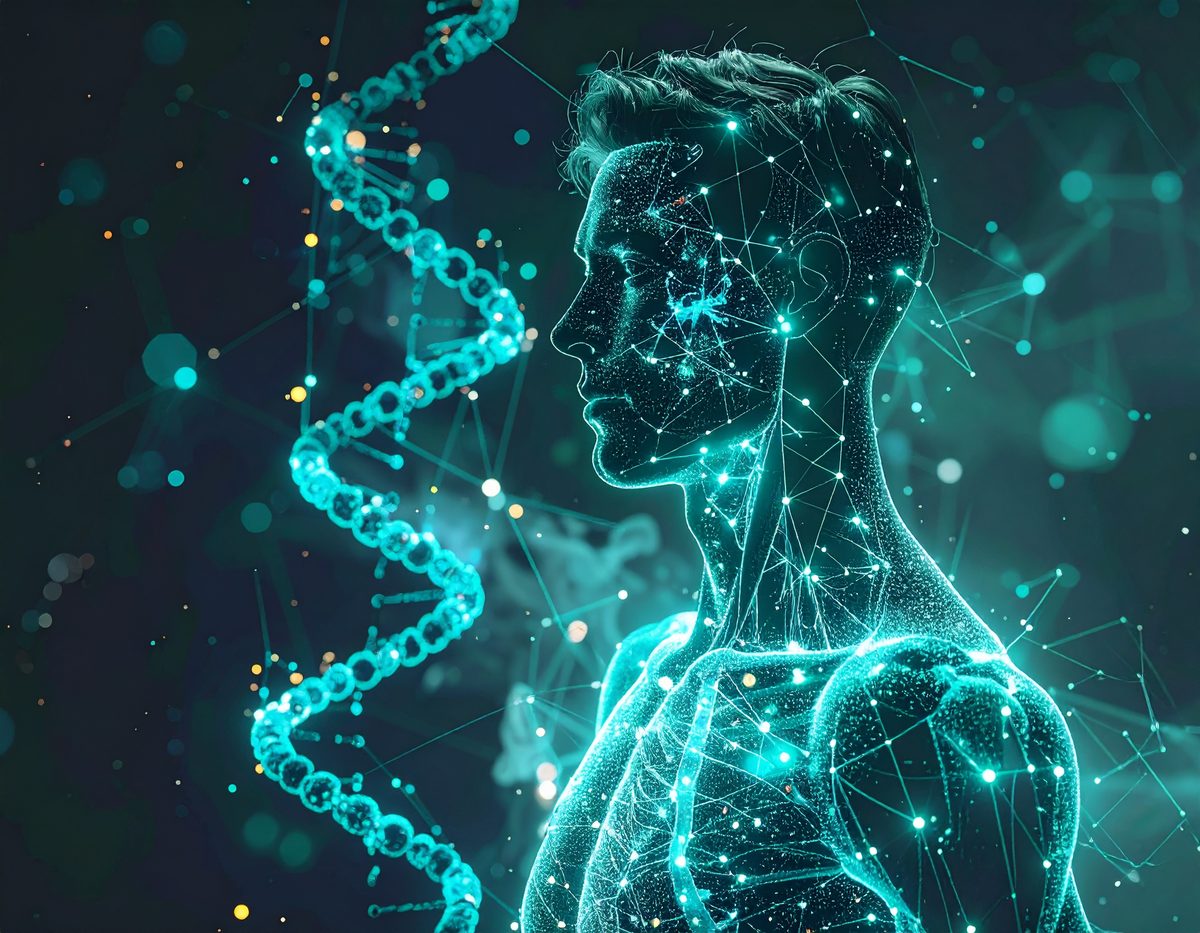
From insight to everyday practice — five episodes on measuring, understanding and acting.
- S12·E1 — From single test to whole story
- S12·E2 — Multi-omics: the film instead of the photo
- S12·E3 — Why the same advice does not work for everyone
- S12·E4 — Measure, understand, adjust
- S12·E5 — Prevention as a lifestyle
Related concepts
Explore further in the Cosmogroup ecosystem
From knowledge to application — choose your next step.
My InnerSelfie
See the whole ecosystem, not separate layers: DNA, epigenetics, microbiome and metabolites together, translated into readable signals.
Discover My InnerSelfie →My Key Nutrients
Support your system in a targeted way: nutrition and formulas tailored to your co-metabolism rather than individual ingredients.
See the range →CosmoPulse
For performance settings: readiness, adaptation and recovery bundled into one readable decision signal.
Discover CosmoPulse →The books · HOST · FORMULA · EDGE
The common thread of this science, from insight to everyday application, by Petra Van Gucht.
See the books →Scientific references
• Li H., et al. (2024) — Multi-omics for decoding host–microbiome interactions. Trends Microbiol.
• Chen Y., et al. (2024) — Microbial volatile organic compounds in host–microbiome communication. Int J Mol Sci.
• Van Gucht P. — HOST (COSMO trilogy): the body as one coherent system.
Frequently asked questions
- What are the new breakthroughs in crosstalk?
- Recent insights that show how DNA, epigenetics, metabolites and volatile signaling substances together form one integrated, two-way ecosystem between the human and the microbiome.
- What is the epigenome–microbiome axis?
- The two-way traffic in which the epigenome helps determine which microbes survive, while microbial metabolites influence the expression of host genes.
- What is FUT2 secretor status?
- A genetic trait that helps determine which bacteria colonize the gut, and thereby influences immune function and nutrient uptake.
- Why is multi-omics important here?
- Because one layer misses the complexity. Multi-omics combines DNA, metabolites, VOCs and genetic variation into a usable whole. This is supportive, not a diagnosis.
Bitten by co-metabolism?
You have just read one piece of the puzzle. There is a path for the curious who want to understand themselves better — and a deeper library for the professional who works with it.
Discover your own story
Curious what co-metabolism means for you? Discover what your own body tries to tell you every day — and stay up to date with new insights.
Discover your analysis →Join us and gain access
Become an affiliated healthcare professional and unlock the depth we reserve for our partners: the books to read online, the Well@Work and Sport experiences, the protocols and a network of like-minded people.
Join us →