
Shift work & chronodisruption
In plain language
Police, healthcare, defense and industry run 24/7 — indispensable, but the body pays a price. Those who regularly work at night not only sleep worse; digestion, immunity and concentration also become disrupted. The reason is an internal clock set to daytime, while you are active when it is set to “rest”.
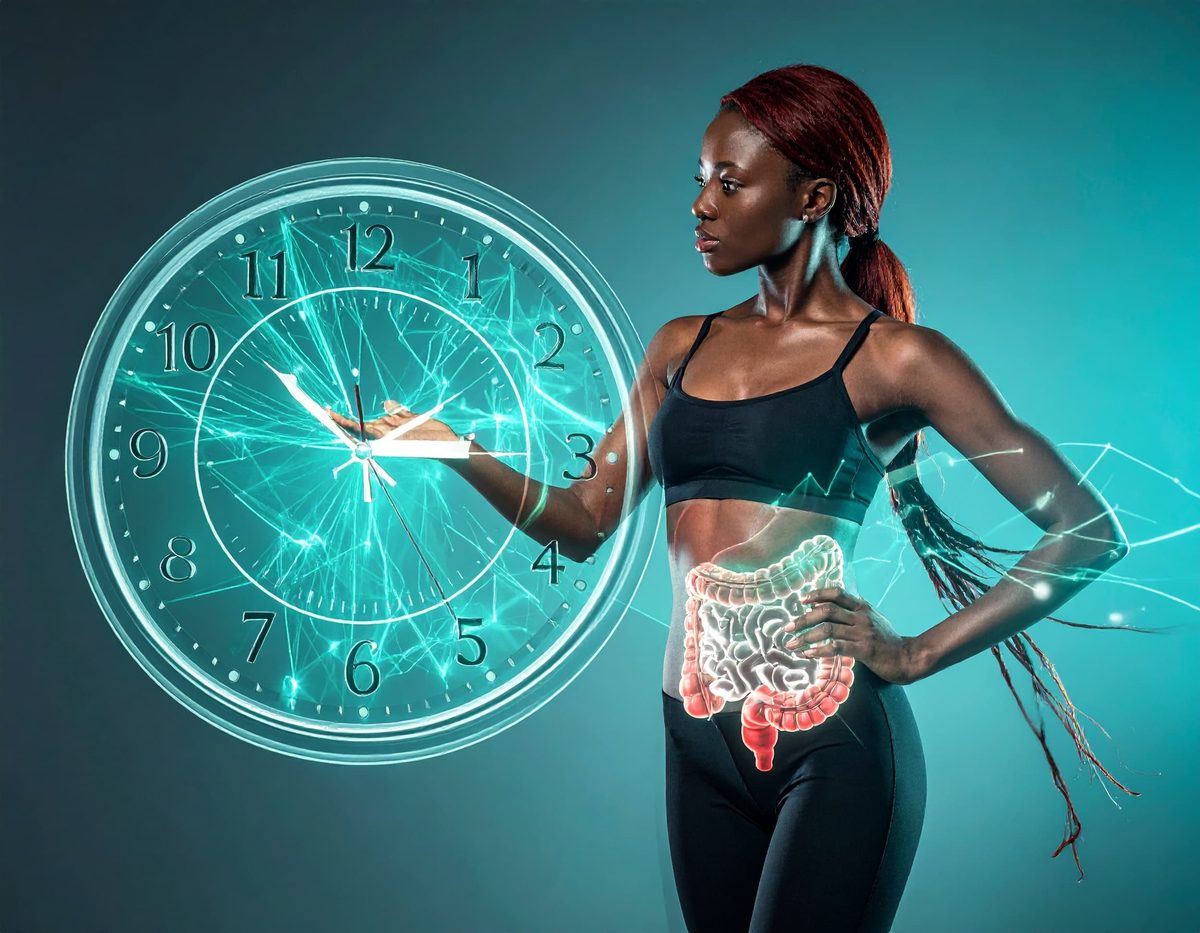
Your gut flora also follows a day-night rhythm. With night work that rhythm clashes with your behavior: eating and being active at times when your gut “thought” it would rest. The result is often less efficient digestion, more inflammation signals and greater fatigue — energy you lose at work and in your free time. For the employee this means burning out faster; for the employer more errors and absenteeism. Those who learn to respect the rhythm and adjust in a targeted way keep more energy for both work and life.
The science behind
The internal clock steers sleep, hormones, metabolism and immunity. An NIH workshop (2020) described how chronodisruption, together with microbiome dysbiosis, increases the risk of metabolic complaints, mood problems and burnout. In shift work the rhythms shift repeatedly without the peripheral clocks being given the time to resynchronize, which produces a chronic mismatch between behavior and biology.
The microbiome plays an active role in this. The composition and activity of gut bacteria oscillates over the day; with night work that oscillation becomes disrupted, so that SCFA production and the histamine balance shift — resulting in gut complaints, fatigue and poorer sleep. Research among personnel with long-term shift load (including BMJ Military Health, 2024) describes a less diverse microbiome and higher inflammation sensitivity. In this way chronodisruption becomes visible deep into the metabolism, not only in the sleep pattern.
The common thread is co-metabolism: how heavily shift work weighs arises from the interplay of DNA (clock genes, chronotype), microbiome, metabolites and lifestyle (light exposure, meal timing, sleep hygiene) together. Chronotype explains why one colleague copes with nights better than another; targeted timing of light, nutrition and recovery determines how much damage is kept in check. This reading is supportive and observational — not a medical diagnosis.
Illustration & CosmoTalks
How stress steers your biology — and how your body learns to let go — in five episodes.
- S7·E1 — Stress isn't only in your head
- S7·E2 — Your nervous system talks to your gut
- S7·E3 — Why recovery starts with rest
- S7·E4 — Sleep as the great restorer
- S7·E5 — From tension to resilience
Related concepts
Explore further in the Cosmogroup ecosystem
From knowledge to application — choose your next step.
My InnerSelfie
See how your biology responds to irregular hours: chronotype, microbiome rhythm and inflammation balance brought into view together.
Discover My InnerSelfie →My Key Nutrients
Support energy and recovery during irregular hours with targeted nutrition and timing, tuned to your co-metabolism.
See the range →CosmoPulse
For performance environments: readiness, adaptation and recovery bundled into one readable decision signal.
Discover CosmoPulse →The books · HOST · FORMULA · EDGE
The common thread of this science, from insight to daily application, by Petra Van Gucht.
See the books →Scientific references
• Voigt RM., et al. (2016) — Circadian rhythm and the gut microbiome. Int Rev Neurobiol.
• Reid KJ., Abbott SM. (2015) — Jet lag and shift work disorder. Sleep Med Clin.
• Van Gucht P. — HOST (COSMO trilogy): rhythm, gut and resilience at work.
Frequently asked questions
- Why is night work so taxing?
- Your internal clock is set to daytime, while you are active during rest periods. That repeated mismatch disrupts sleep, digestion and immunity.
- What does my gut have to do with shift work?
- Your microbiome has a day-night rhythm. With night work this clashes with eating and activity, which shifts SCFA production and the inflammation balance.
- Can I make shift work healthier?
- Often yes, through targeted light, sleep and meal timing. Personal tuning to your chronotype helps to limit the damage.
- Is everyone equally sensitive to night work?
- No. Chronotype and genetic predisposition mean that one person copes with nights better than another. This remains supportive, not medical advice.
Hooked on co-metabolism?
You've just read one piece of the puzzle. There is a path for the curious who want to understand themselves better — and a deeper library for the professional who works with it.
Discover your own story
Curious what co-metabolism means for you? Discover what your own body tries to tell you every day — and stay up to date with new insights.
Discover your analysis →Join us and get access
Become an affiliated healthcare professional and unlock the depth we reserve for our partners: the books to read online, the Well@Work and Sport experiences, the protocols and a network of like-minded people.
Join us →