
VO₂max & post-operative recovery
In plain language
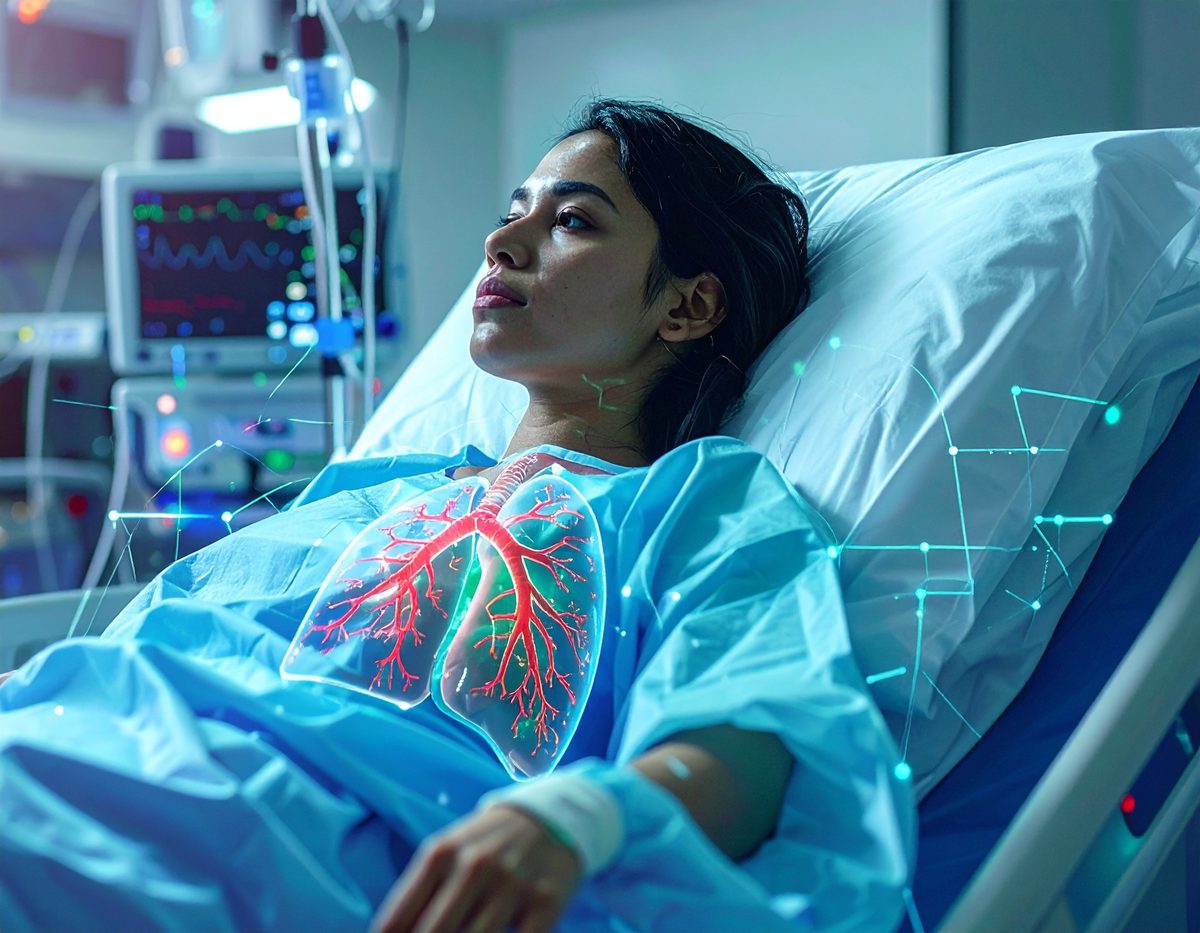
A 61-year-old woman is facing a planned knee operation. During screening it stands out that her VO₂max is low: she moves little, breathes shallowly and feels short of breath quickly. The anesthetist explains that this can slow her recovery and raise the chance of complications. Why does one patient recover smoothly while another needs weeks? The answer lies in the interplay between lung capacity, the microbiome and recovery capacity.
VO₂max is more than a sporting term. It tells you how well your body can take up oxygen and deliver it to the tissues — exactly what is needed after an operation to heal wounds and temper inflammation. Good lung capacity means better tissue oxygenation; a balanced microbiome supports the immune system and lowers infection risk. Those who build up their fitness before a planned operation — breathing, movement, nutrition and recovery — often come through it stronger and faster. That preparatory path is called prehabilitation.
The science behind
Pre-operative fitness is one of the strongest predictors of how an operation goes. Work in The Lancet Respiratory Medicine supports the finding that cardiopulmonary exercise testing — with VO₂max as the core measure — helps to predict post-operative complications: patients with a lower maximum oxygen uptake are at greater risk during and after anesthesia. Analyses in BMJ show that better respiratory fitness is associated with smoother recovery, fewer complications and a shorter hospital stay. VO₂max is therefore no abstract sporting figure, but a clinical window onto recovery capacity.
Beneath that window lies a biological network. Publications in Frontiers in Immunology describe the gut–lung axis: the two-way communication in which the microbiome helps to steer the immune function of the lungs and infection risk after surgery. A disrupted microbial balance goes hand in hand with more inflammation and slower defense, while a more diverse ecosystem supplies short-chain fatty acids that have an anti-inflammatory effect and support tissue healing. Oxygen uptake, lung capacity and microbial communication thus together determine whether the body absorbs a procedure smoothly or is thrown out of balance by it.
The common thread is co-metabolism: whether someone recovers quickly or slowly after an operation arises from the interplay of DNA, microbiome, metabolites and lifestyle together. Gene variants color the predisposition for lung capacity and susceptibility to inflammation, but breathing training, movement, nutrition and microbiome support in the weeks before a procedure determine what you do with that predisposition. In this reading prehabilitation is not a side issue, but a way to build recovery capacity purposefully — and so to limit complications, fatigue and days in hospital. This reading is supportive and observational — not a medical diagnosis.
Illustration & CosmoTalks
How your body recovers after strain, illness or too little sleep — five episodes.
- S8·E1 — Recovery is an active process, not a pause
- S8·E2 — Sleep as the repair crew
- S8·E3 — Restarting the power plants
- S8·E4 — Why recovery differs from one person to the next
- S8·E5 — From exhaustion back to resilience
Related concepts
Discover more in the Cosmogroup ecosystem
From knowledge to application — choose your next step.
My InnerSelfie
See how oxygen uptake, lung capacity and microbial communication color your recovery capacity — DNA, microbiome and metabolome in one readable picture.
Discover My InnerSelfie →My Key Nutrients
Support fitness, inflammation balance and recovery around a planned procedure with nutrition tuned to your co-metabolism.
View the range →CosmoPulse
For performance environments: readiness, adaptation and recovery bundled into one readable decision signal.
Discover CosmoPulse →The books · HOST · FORMULA · EDGE
The common thread of this science, from insight to daily application, by Petra Van Gucht.
See the books →Scientific references
• Levett D.Z.H., Grocott M.P. (2021) — Respiratory fitness and surgery outcomes. BMJ.
• Budden K.F., et al. (2020) — Microbiome and the lung–immune crosstalk. Frontiers in Immunology.
• Van Gucht P. — EDGE (COSMO trilogy): recovery capacity, fitness and co-metabolism.
Frequently asked questions
- What is prehabilitation?
- Purposefully building up your fitness before a planned operation — breathing, movement, nutrition and recovery — so that you come through the procedure better and recover faster.
- Why does VO₂max predict surgical risk?
- A higher maximum oxygen uptake means better tissue oxygenation and recovery capacity; a low VO₂max goes hand in hand with more complications and slower wound healing.
- What does my microbiome have to do with an operation?
- Through the gut–lung axis the microbiome influences immune function and infection risk; a balanced ecosystem supports defense and helps to temper inflammation.
- Can I influence my recovery?
- Yes. Fitness, breathing, nutrition and microbiome balance in the weeks before a procedure together contribute to smoother recovery and fewer complications.
Hooked on co-metabolism?
You have just read one piece of the puzzle. There is a path for the curious who want to understand themselves better — and a deeper library for the professional who works with it.
Discover your own story
Curious what co-metabolism means for you? Discover what your own body is trying to tell you every day — and stay up to date with new insights.
Discover your analysis →Join us and gain access
Become an affiliated healthcare professional and unlock the depth we reserve for our partners: the books to read online, the Well@Work and Sport experiences, the protocols and a network of like-minded people.
Join us →