
Adaptation
In plain language
Why does one person grow stronger from a demanding training week while another falls ill? The answer lies not in the load, but in the adaptation. Adaptation is your body's ability to cope with stimuli: a workout, a stress peak, a long journey, a short night's sleep. The same “what” leads to a different “how” in everyone.
You can think of adaptation as the springiness of an elastic band: stretch it and it springs back, provided it is given time. Keep pulling without rest and it loses its tension. That is precisely why adaptation matters more than raw capacity: someone who adapts smoothly lasts longer and is injured less often. Making adaptation visible — stable, slow or fragile — helps you understand when pushing on brings growth and when it instead breaks things down.
The science behind
Adaptation is a core concept in exercise physiology and the broader biology of stress. The classic supercompensation model describes how a training stimulus first produces fatigue and only leads to a higher level after sufficient recovery; without recovery the load accumulates and capacity declines. The related concept of allostasis (McEwen) describes adaptation across several systems at once — hormonal, immunological, autonomic — and explains why chronic, unresolved load eventually becomes visible in a range of markers.
Adaptive capacity varies strongly between individuals and is partly biologically anchored. Training studies show that the response to the same program ranges from strong “responders” to people who barely react at all (J Appl Physiol). The microbiome plays a part in this: short-chain fatty acids from fiber fermentation support energy balance and dampen low-grade inflammation, two factors that influence recovery and adaptation. In this way the gut becomes interwoven with a process we once attributed purely to muscles and the nervous system, and adaptation becomes a window onto the quality of recovery, not merely onto exertion.
The common thread is co-metabolism: whether someone adapts smoothly or instead responds fragilely arises from the interplay of DNA, microbiome, metabolites and lifestyle (sleep, nutrition, timing, recovery) together. Gene variants color the predisposition in the background, but recovery and context determine what you do with it. Adaptation is therefore not a fixed given, but a dynamic reflection of how your whole system deals with pressure. This reading is supportive and observational — not a medical diagnosis.
Illustration & CosmoTalks
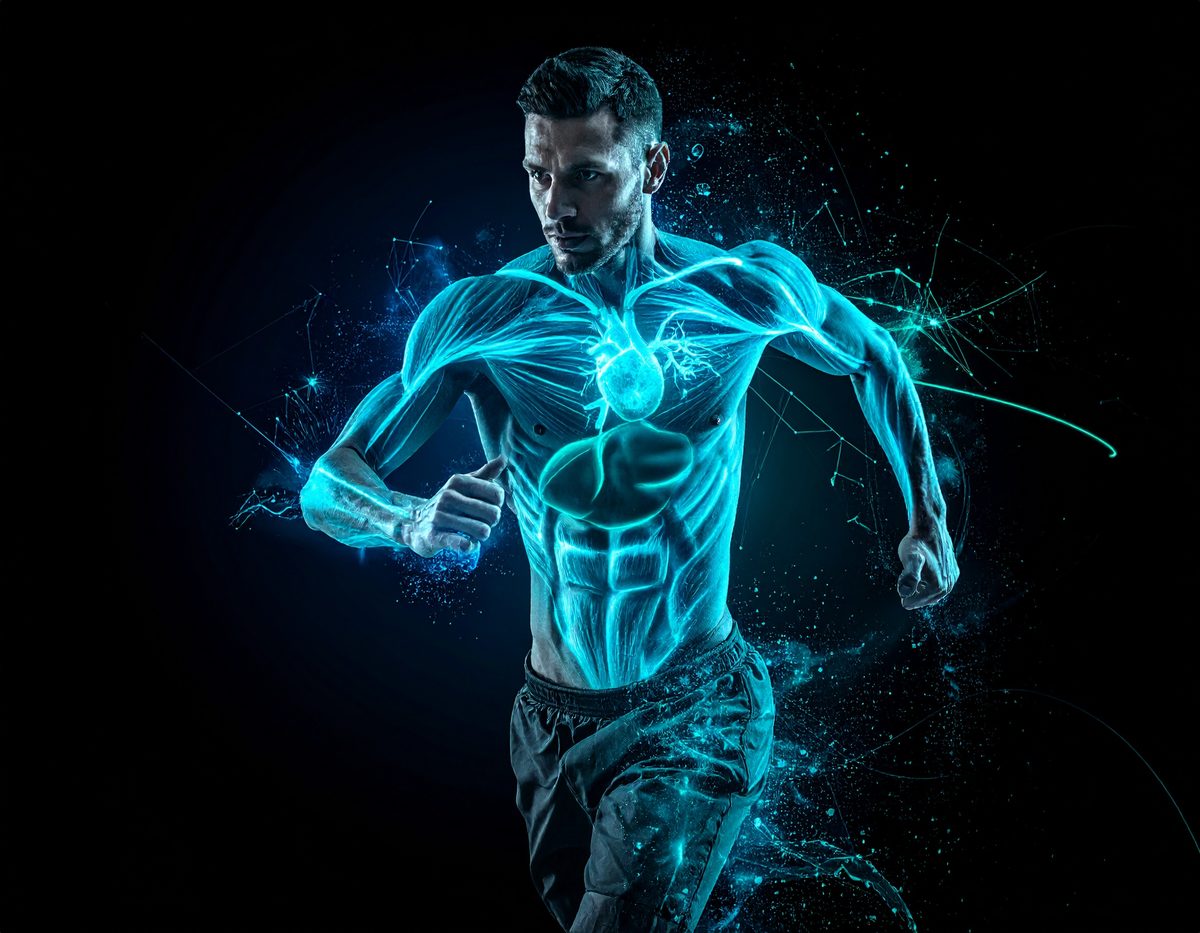
How your body adjusts to load, travel and pressure — five episodes.
- S6·E1 — Resilience is a trainable quality
- S6·E2 — Why one person adapts faster
- S6·E3 — Your internal clock sets your limits
- S6·E4 — Immunity as a silent performance factor
- S6·E5 — Adaptation: the art of course-correcting
Related concepts
Explore further in the Cosmogroup ecosystem
From knowledge to application — choose your next step.
My InnerSelfie
See how your predisposition for recovery and adaptation connects with DNA, microbiome and lifestyle — in a single picture.
Discover My InnerSelfie →My Key Nutrients
Support recovery and a calm inflammatory balance with targeted nutrition, tailored to your co-metabolism.
See the range →CosmoPulse
For performance environments: readiness, adaptation and recovery bundled into a single readable decision signal.
Discover CosmoPulse →The books · HOST · FORMULA · EDGE
The common thread of this science, from insight to everyday application, by Petra Van Gucht.
See the books →Scientific references
• Bouchard C., Rankinen T. (2001) — Individual differences in response to regular physical activity. Med Sci Sports Exerc.
• Clark A., et al. (2016) — Exercise-induced stress behavior, gut-microbiota and adaptation. J Int Soc Sports Nutr.
• Van Gucht P. — EDGE (COSMO trilogy): adaptation, recovery and co-metabolism.
Frequently asked questions
- What is the difference between adaptation and fitness?
- Fitness is a level; adaptation is the process by which you reach or lose that level. Good adaptation ensures that load leads to growth instead of exhaustion.
- Why doesn't everyone respond the same way to the same training?
- Adaptive capacity is partly biologically anchored and is co-determined by recovery, sleep, nutrition and the microbiome — the co-metabolic whole differs from person to person.
- Does my gut influence adaptation?
- Yes. Through short-chain fatty acids and the regulation of inflammation, the microbiome influences recovery and energy balance, and therefore how well you adapt.
- Can I improve my adaptive capacity?
- Often you can, through dosed load, sleep, nutrition and recovery. This is supportive and does not replace medical guidance when symptoms arise.
Hooked on co-metabolism?
You have just read one piece of the puzzle. There is a path for the curious who want to understand themselves better — and a deeper library for the professional who works with it.
Discover your own story
Curious what co-metabolism means for yóu? Discover what your own body tries to tell you every day — and stay up to date with new insights.
Discover your analysis →Join us and gain access
Become an affiliated healthcare professional and unlock the depth we reserve for our partners: the books to read online, the Well@Work and Sport experiences, the protocols and a network of like-minded peers.
Join us →